
When a designer specifies a custom cabinet run for a luxury kitchen or high-end residential project, the result they see on install day is the culmination of dozens of precise, interdependent decisions made long before a single panel is cut. Understanding what actually happens inside a cabinet fabrication shop helps design professionals communicate more effectively with their millwork partners ‚ and set realistic expectations for their clients.

From Drawing to Cut List
Every cabinet fabrication project begins with a detailed drawing review. At BradleyBuilt, our team works directly from architectural drawings and designer specifications to produce cut lists, material orders, appliance and hardware call-outs before anything touches a machine. This phase is where discrepancies are caught ‚ ceiling heights that don't match elevations, appliance specs that conflict with panel depths, or trim details that need to be resolved before production begins. **Pro tip for designers:** Submit final appliance spec sheets alongside your millwork drawings. Even small variance in a refrigerator or range surround can cascade into costly remakes.

Sheet Goods, Solid Wood & Material Selection
Cabinet boxes are typically constructed from plywood or MDF depending on the application. Plywood offers superior screw-holding and moisture resistance ‚ preferred for kitchens and baths. MDF provides a flawlessly smooth surface ideal for painted finishes and routed profiles. Face frames, doors, and drawer fronts introduce solid lumber into the equation. Species selection matters not just aesthetically but structurally ‚some woods are more dimensionally stable than others, particularly in high-humidity environments. At BradleyBuilt, we work with designers to match grain character, figure, and color tone across an entire project, sourcing from the same lot whenever possible. ** Key material decisions to coordinate early:** - Box material (plywood species, MDF grade, or hybrid) - Door construction (solid, veneered panel, MDF core) - Finish compatibility (stain, paint, or natural oil) - Edge banding treatment (PVC, wood veneer, or solid wood lipping)
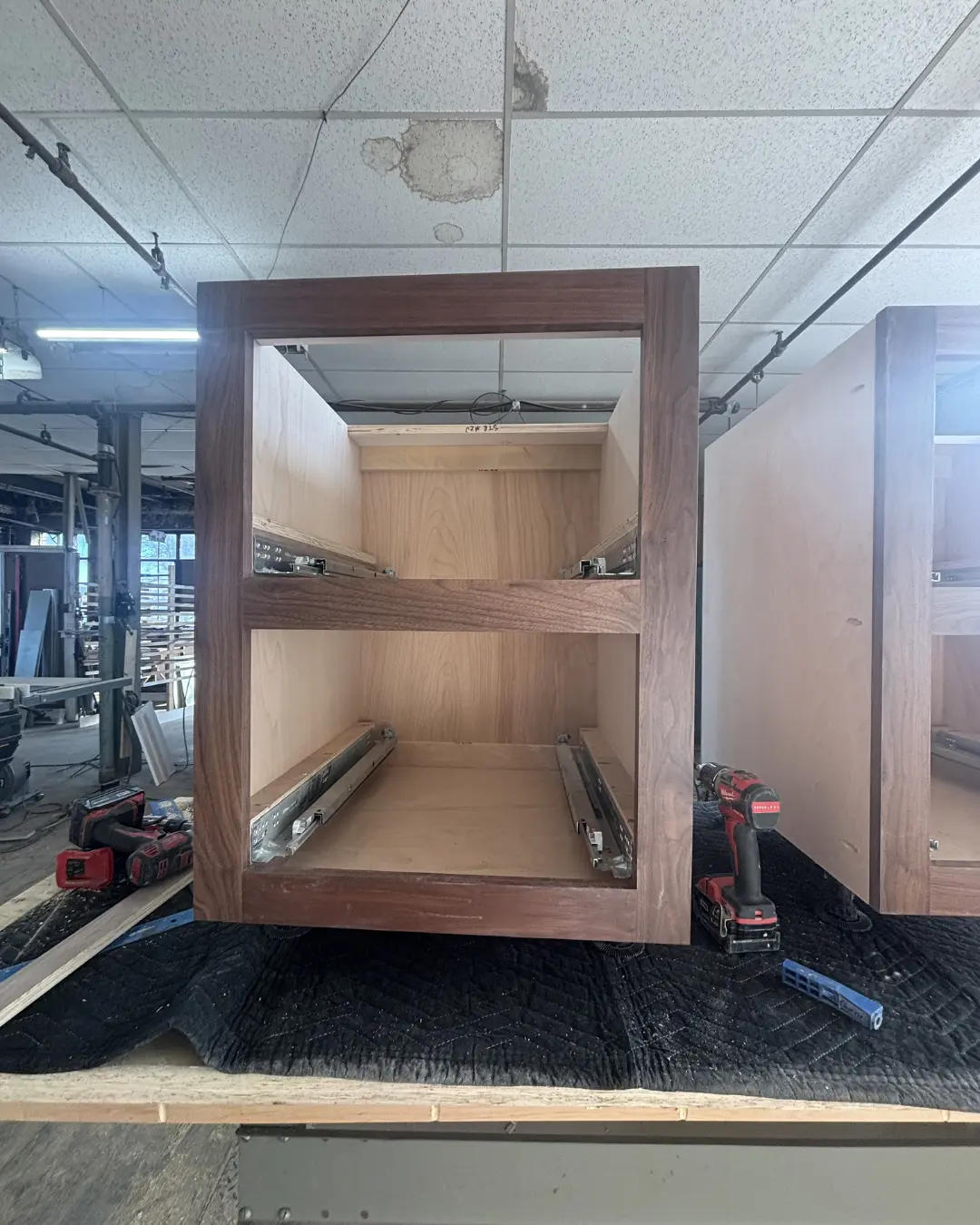
Joinery, Assembly & Quality Control
Unlike modern cabinet shops we at BradleyBuilt are bench craftsman where every piece is formed using hand tools so no custom detail, scribe or molding detail is lost. After assembly, every cabinet is inspected: drawer slides are tested, doors are hung and adjusted, and finish surfaces are reviewed under direct light to catch any tear-out, blemish, or grain mismatch before finishing. What ships to the job site should require minimal remediation.
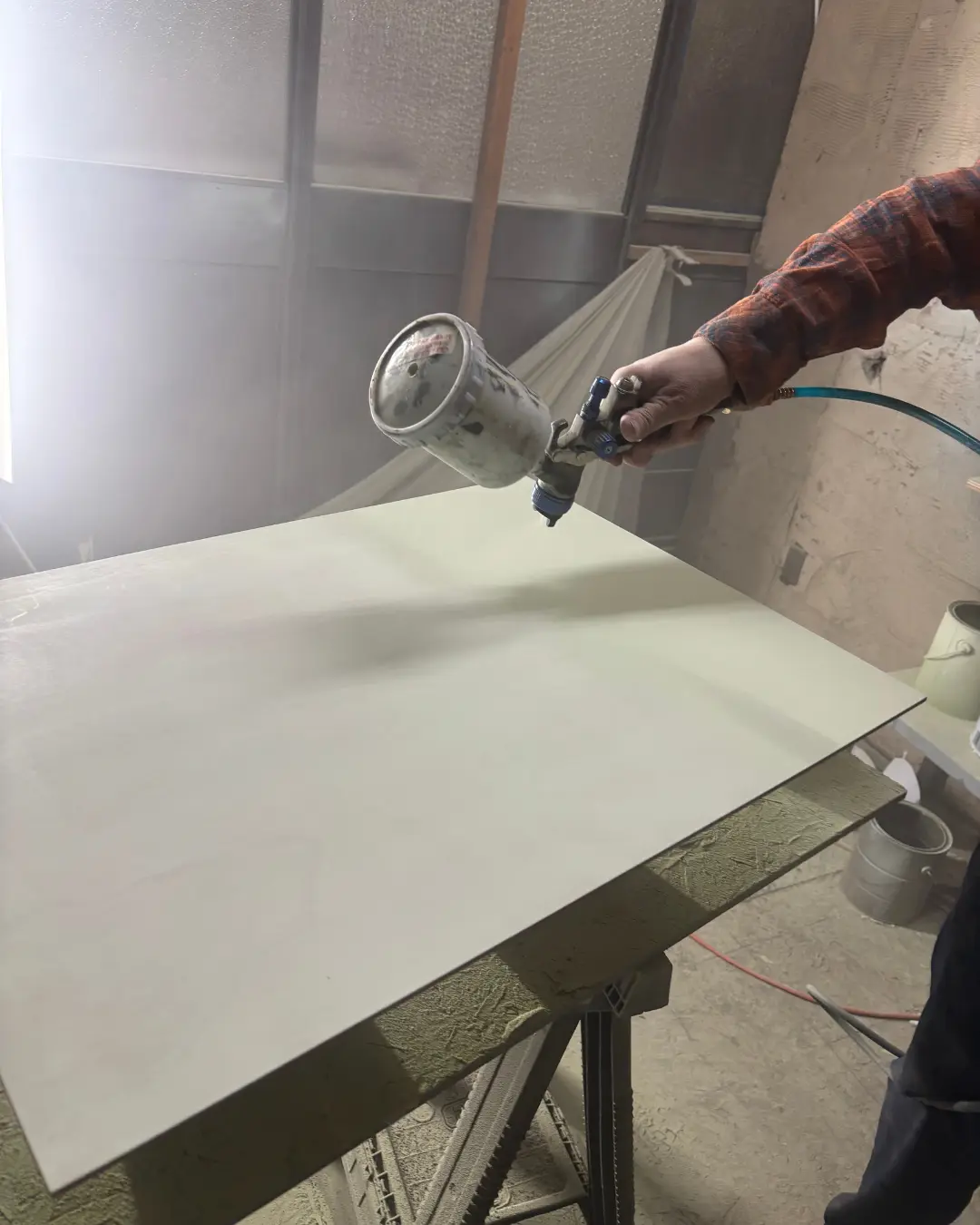
Finishing: The Stage Most Underestimated
Cabinet finishing is where fabrication art meets chemistry. Sprayed lacquers, conversion varnishes, and waterborne polyurethanes all behave differently under varying temperature and humidity conditions. Color matching for painted cabinetry is an iterative process ‚ particularly for custom colors pulled from paint manufacturers not native to the millwork world. At BradleyBuilt, finish samples are submitted for designer approval before production finishing begins. This single step eliminates the most common source of finish disputes on the back end of a project.
BradleyBuilt specializes in custom cabinet fabrication for residential and commercial design projects. Contact us to discuss your project details.