
Kitchen design is in a compelling moment. After years of all-white, minimalist dominance, the pendulum has swung toward warmth, material richness, and spatial intentionality. For interior designers and architects navigating client expectations against long-term livability, here's where sophisticated kitchen design is heading — and what it means for millwork specifications.
Warm Tones Are Replacing Cool Neutrals
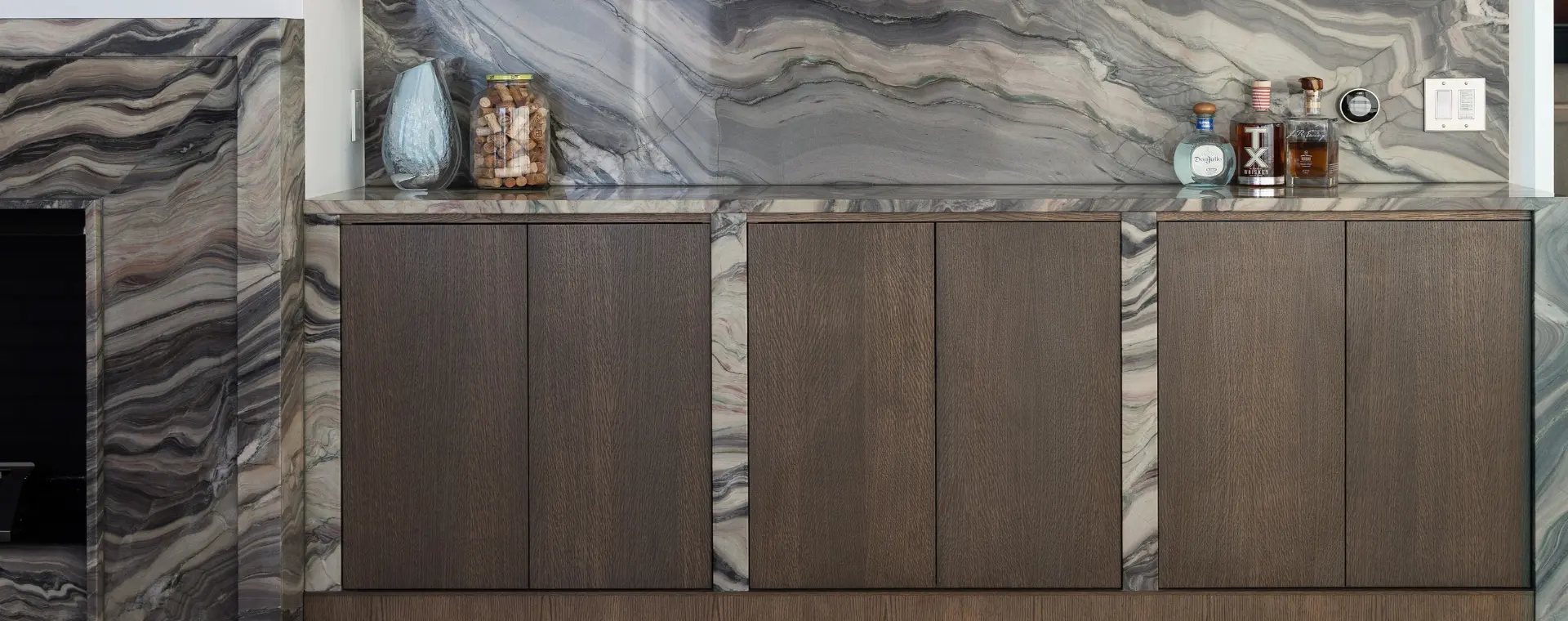
White and gray kitchens aren't disappearing, but they're no longer the default. Warm whites, creamy linens, deep taupes, and nature-inspired greens are now the palette clients are gravitating toward. Greige cabinetry with undertones of warm clay or aged oak is appearing consistently across high-end residential projects. For millwork, this shift means more stained wood and less painted cabinet work — and greater attention to wood species selection. White oak continues to lead, valued for its open grain and range of tonal expression from blonde to deep amber depending on the finish. Walnut is also a strong contender for natural woods with the deep brown color as an accent to the taupe's and the fresh greens.
Specifying tip: When pairing stained lowers with painted uppers, ensure your millwork partner can match sheen levels precisely. Mismatched gloss levels are immediately visible under kitchen lighting.
Integrated Everything — Appliances, Hardware, Storage
The move toward integrated and paneled appliances shows no signs of slowing. Refrigerators, dishwashers, and ventilation hoods are increasingly concealed behind custom millwork panels, creating seamless elevations where the cabinetry reads as one continuous composition. Simultaneously, hardware is polarizing: some clients want completely hardware-free kitchens using integrated pulls and push-to-open mechanisms, while others are embracing bold, sculptural hardware as a design statement.

What this means for cabinet design:
- Frameless (European) construction is preferred for full-overlay, seamless looks
- Appliance panel tolerances require close coordination with appliance manufacturers early
- Push-to-open mechanisms require specific drawer slide specifications — not all are equal
Dedicated Zones & The "Working Kitchen" Concept
Open-plan kitchens are evolving into zoned environments. The "working kitchen" — a secondary prep and utility space tucked behind the primary showpiece kitchen — is increasingly common in larger residential projects. This allows the main kitchen to remain a curated, guest-facing environment while real cooking happens in a more functional, less precious space. For designers, this creates an opportunity to specify two distinct millwork palettes within one project: refined and material-forward in the primary kitchen, durable and utilitarian in the working kitchen.
Unlacquered Brass, Aged Bronze & Patina Finishes
Metal finishes that develop character over time — unlacquered brass, oil-rubbed bronze, and hand-rubbed copper — are being specified with increasing confidence. These finishes align with a broader client appetite for materials that look better with age rather than requiring constant maintenance to look new. When pairing these finishes with cabinetry, consider how the warm metal tones interact with wood grain and painted surfaces over time. The goal is a finish ecosystem that ages cohesively.